How to Become a Smart Company
AI makes most companies dumber. Architecture makes them smarter.
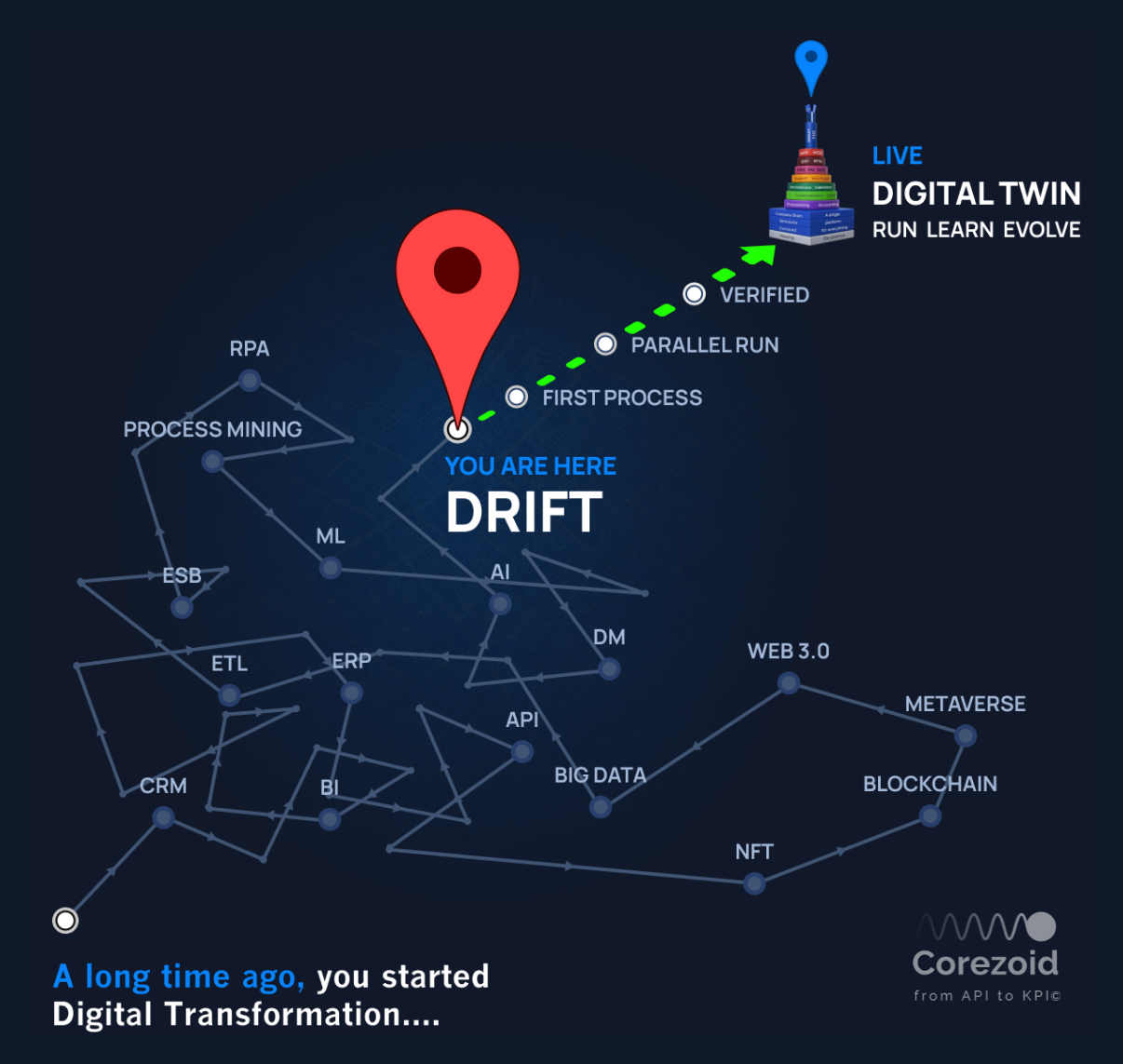
Companies are adding AI to architectures accumulated over decades: legacy software, integrations, spreadsheets, vendor dependencies, and local operating models. Each new layer increases the fragmentation tax—the cost of coordinating systems that were never designed as a whole.
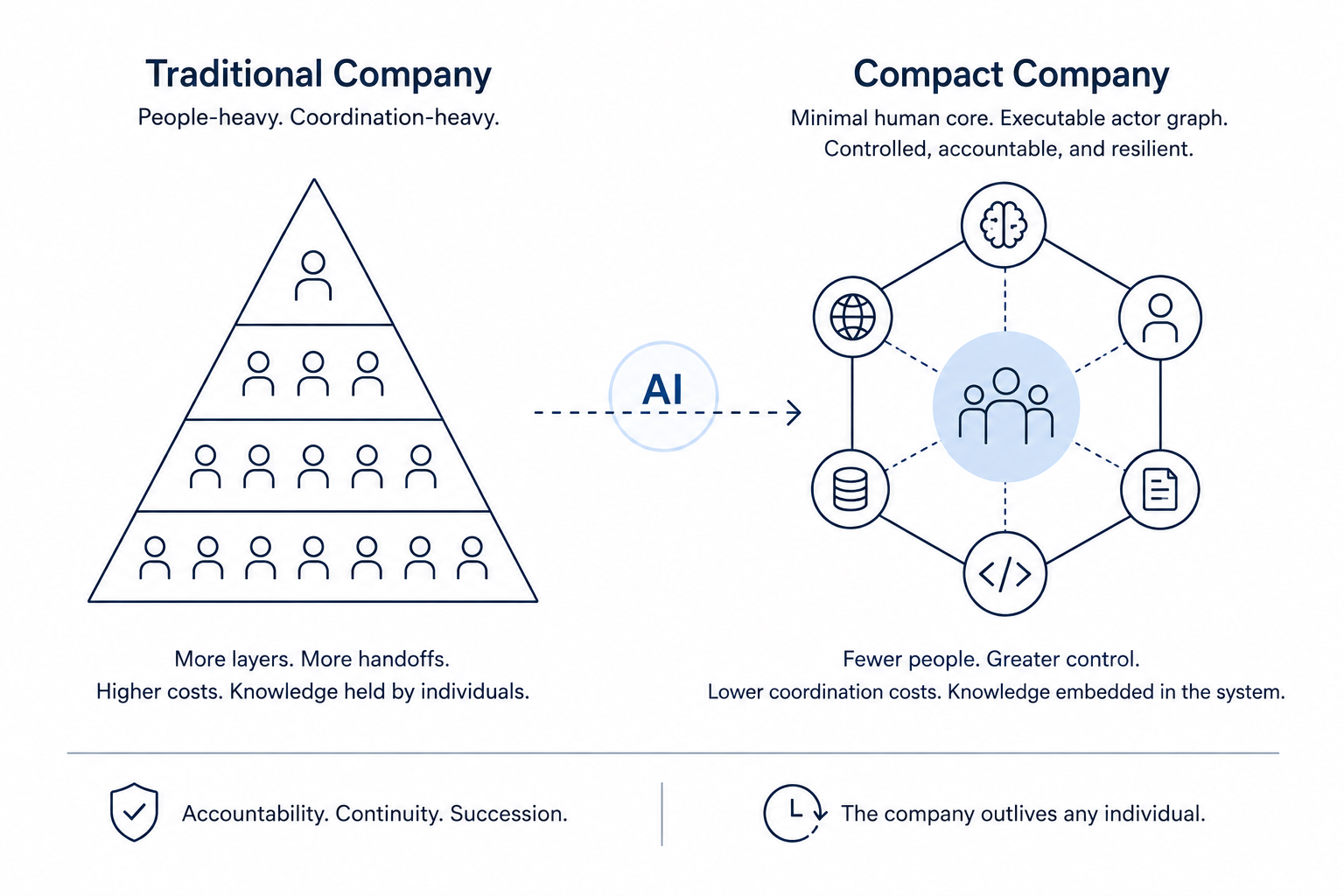
AI accelerates the architecture it enters. In a fragmented company, it amplifies disconnected decisions, interfaces, and conflicting versions of reality. A Smart Company begins with a proactive digital twin: an executable model of its actors, processes, connections, states, and transitions.
In his new article, "How to Become a Smart Company", our founder, Alexander Vityaz, explains how architecture gives people, software, and AI a shared operational context. This model makes the company plastic, governable, and capable of changing as a system.
By connecting memory, computation, decisions, and real events in one operational loop, the digital twin becomes the Company Brain. AI becomes part of the company's intelligence.
AI makes most companies dumber. Architecture makes them smarter.